
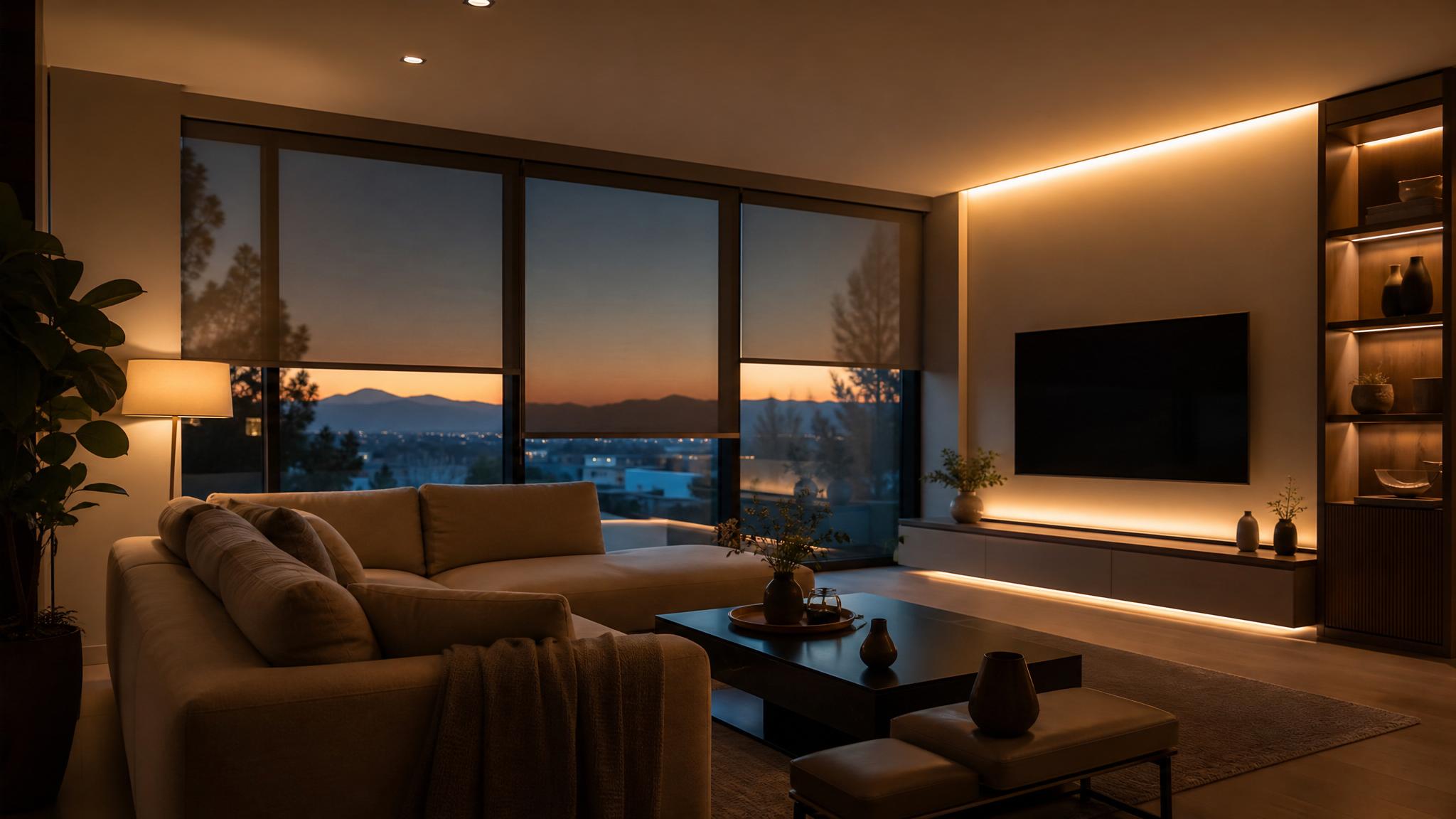
A standalone smart thermostat is a solid upgrade on its own — scheduling, remote control, and basic energy reporting. Integrating it into a whole-home automation system unlocks a different level of value, particularly in a climate like Tampa Bay's where cooling is the dominant energy cost nearly year-round.
Standalone vs. Integrated
A standalone smart thermostat operates independently — its own app, its own schedule, no awareness of what else is happening in the house. An integrated thermostat becomes part of broader automations: it can respond to a home/away scene (set back automatically when everyone leaves, recover before anyone arrives), coordinate with motorized shades (closing shades during peak afternoon sun to reduce cooling load before the thermostat even has to work harder), and factor into whole-home energy monitoring alongside solar and other systems.
Occupancy-Based Automation
Rather than a fixed schedule, an integrated system can use occupancy sensing (from security system motion sensors, geofencing on phones, or door/window sensor activity) to adjust climate automatically based on whether the home is actually occupied — a meaningfully more efficient approach than a schedule built around a "typical" day that doesn't always match reality.
Zoning for Florida Homes
Larger homes and homes with additions or bonus rooms often have real temperature imbalances between zones. Integrated systems can coordinate multiple thermostats and zone dampers as one system, prioritizing comfort in occupied zones while reducing conditioning in unused areas — a common source of both comfort complaints and wasted energy in larger Tampa Bay homes.
Humidity Matters as Much as Temperature
Florida's climate makes humidity control nearly as important as temperature for comfort and mold prevention. Integrated systems can coordinate dehumidification cycles with the AC system more intelligently than a basic thermostat schedule, and some whole-home platforms can factor humidity readings into automations (running a dehumidifier or adjusting fan cycles) rather than treating temperature as the only relevant metric.
What to Look for When Integrating
- Platform compatibility — confirm your chosen thermostat brand has native integration with your smart home platform, rather than a workaround that may be less reliable.
- Multi-zone support if your home has more than one HVAC system or zoned ductwork.
- Energy reporting that rolls up into whole-home energy monitoring, if that's part of your system.
The Bottom Line
A smart thermostat is a good standalone purchase. A smart thermostat integrated into a whole-home automation system, with occupancy-based automation and coordination with shades and other systems, is where the real efficiency gains — and the more meaningful reduction in Tampa Bay's typically significant cooling costs — actually come from.